David Shoun
Killers of the Flower MoonDavid Shoun was an Osage County physician and the brother of James Shoun. During the federal investigation into the Osage murders, his role in the final days of Bill Smith became a point of scrutiny: he acknowledged that he and James had arranged a private meeting with Smith in the hospital and confirmed that the nurse had been asked to leave. The meeting yielded no known identification of Smith’s killers, but it involved estate paperwork as well as questions about a possible dying statement, placing the doctors at a consequential intersection of medicine, family connections, and property administration.
Medical and Family Connections
David and James Shoun were physicians to the families of William K. Hale and the Burkharts. Their professional relationships placed them close to people at the center of the investigation, though that proximity by itself did not establish wrongdoing. After Bill Smith was badly injured in the bombing of the Smiths’ home, the brothers were among those present during an important private conversation with him.
The investigation already had reason to scrutinize the Shouns. In the Anna Brown case, a bullet that should have been apparent during the autopsy had gone missing. T. B. White suspected the brothers in connection with that disappearance, but suspicion was not proof that either had taken the bullet. The missing evidence and the later hospital meeting became separate points of concern as White tried to determine what had happened to the Smith family and whether those with access to victims or records had withheld information.
The Hospital Meeting
After the explosion, a nurse who had cared for Bill Smith recalled that his feverish mutterings included names she could not make out. She also remembered that, shortly before his death, Bill met with his doctors and his lawyer; the doctors asked her to leave. She suspected he might have made a statement about who had blown up his house, but she could not report what he had said.
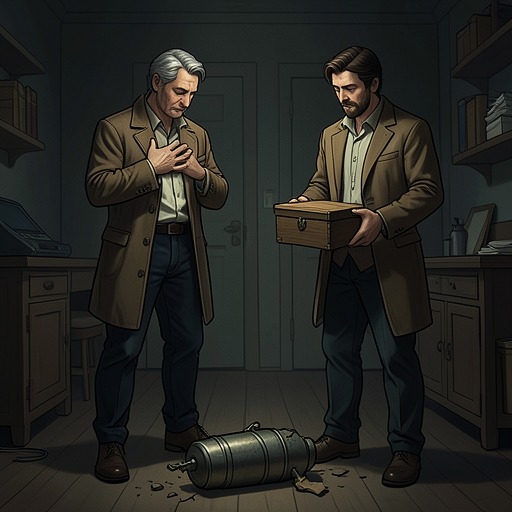
T. B. White questioned the people who had been in the room, and federal prosecutors later examined the meeting as well. David Shoun acknowledged that he and James had summoned the lawyer because they believed Bill might identify his killers. David said nothing came of that expectation: if Bill knew who had blown him up, he never said. When challenged about the nurse’s account, David confirmed that she had been asked to step out. He insisted that Bill had not named the killers and invoked their friendship, explaining that Bill had given him his hat.
James likewise maintained that Bill had never identified the person responsible. The two accounts aligned on the central point that Bill did not disclose a killer to them, but they did not erase the nurse’s recollection that she had been excluded from the room. The surviving record therefore preserves both the doctors’ denials of hearing an identification and the circumstances that made investigators question the meeting.
The Estate Paperwork
The meeting also had a property consequence. During it, James Shoun was named administrator of Rita Smith’s estate, a position that allowed him to execute her will. Such appointments could be lucrative for white administrators and could create opportunities for graft. The fact that the appointment occurred while Bill was near death gave the private meeting significance beyond the question of whether he could identify the bombers.
A prosecutor asked David whether he and his brother had been trying to obtain a dying declaration from Bill. David answered no. The account of the episode instead connects the doctors’ request for Bill’s lawyer to paperwork for Bill to sign before he died. The record establishes that the lawyer was called, that the nurse was asked to leave, and that the estate matter was handled; it does not establish that David participated in the bombing or that Bill privately identified its perpetrators.
Investigative Significance
David’s importance in the narrative lies in this unresolved overlap between an investigative lead and a transfer of legal authority. Investigators wondered whether Bill had possessed information about the attacks and whether the hospital meeting had been arranged to obtain it. The known outcome was different: no accusation against a killer emerged, while paperwork concerning the estate was completed. David’s testimony made the exclusion of the nurse explicit, yet his insistence that Bill named no one left the central question unanswered.
His episode also belongs to a broader account of how difficult it was to reconstruct the Osage murders. The missing bullet in Anna Brown’s case and the uncertain testimony surrounding Bill Smith’s last hours show how gaps in evidence could generate suspicion without resolving responsibility. David remains a scrutinized witness within that record—not a proven participant in murder, but a physician whose actions and connections exposed how closely medical access, family ties, and estate control could converge in the investigation.